Heading inland
We have spent the past month or so exploring some of Brazil’s beautiful coastline in the states of Bahia, Sao Paulo and Rio de Janeiro. We chose not to blog much on this leg of the journey as our travels were focused more on spending time with family that came to visit, beach-hopping and finding spectacular scenery as opposed to searching for wildlife. However, leaving Brazil’s coastline behind, we began our journey inland towards the northern Pantanal and a return to more wildlife-focused activities.
En route, we chose to visit Emas National Park with the hope of spotting the elusive maned wolf. Emas is a protected area of Cerrado habitat and a UNESCO World Heritage Site in central Brazil1. The national park is a vital refuge for Cerrado fauna in an otherwise heavily farmed landscape, as well as an important headwater source due to its location on the Central Brazilian Plateau. A number of important rivers are born within the national park boundary, including Rio Araguaia, which eventually flows into the Amazon2. Arriving at the entrance to the national park in the early on a Sunday afternoon, we unfortunately learnt that the park was shut the next day (and every Monday, which we hadn’t realised!). As we had a booking for our lodge in the Pantanal fast approaching, we therefore just had that afternoon to explore.
Self-drive safari
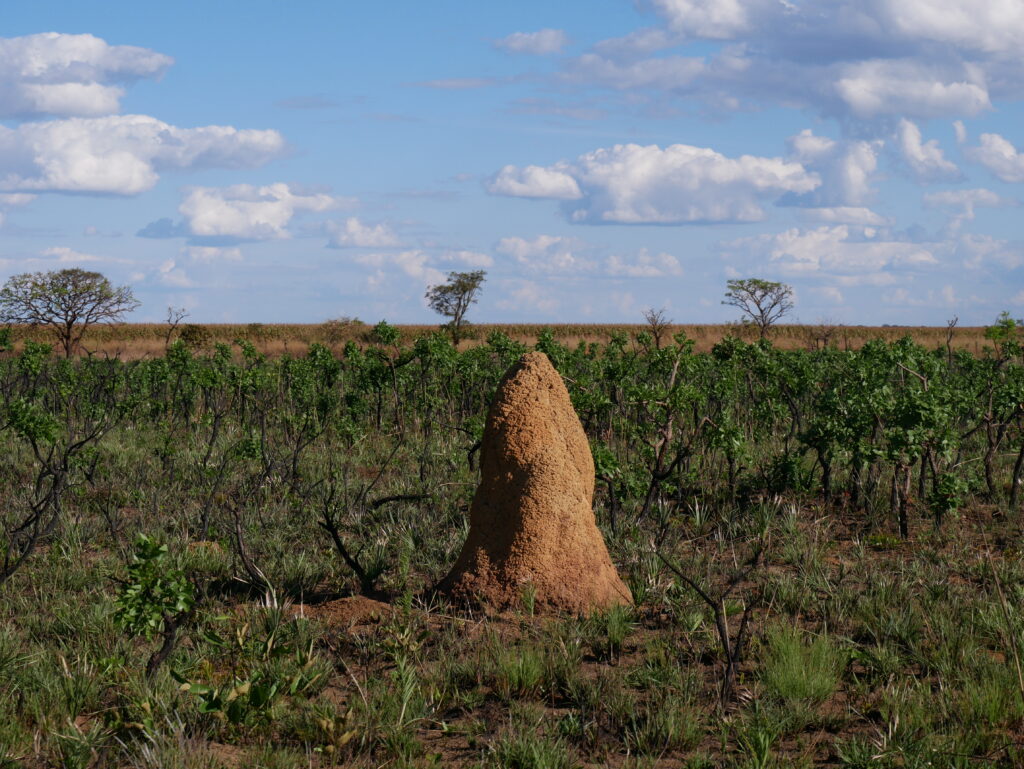
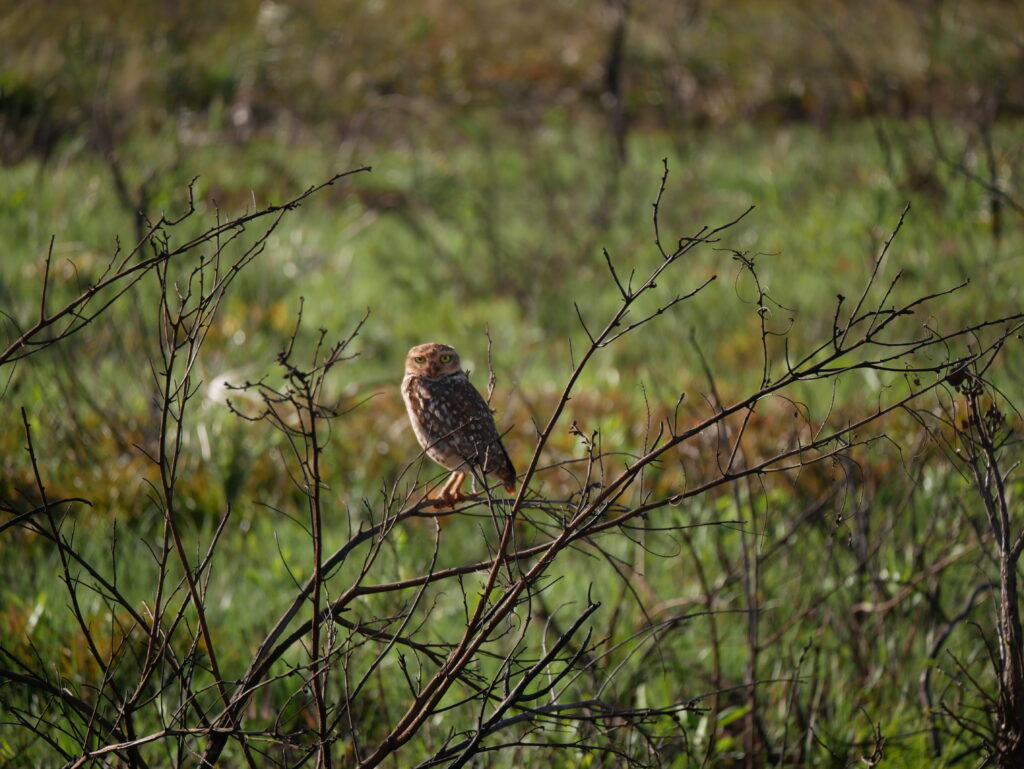
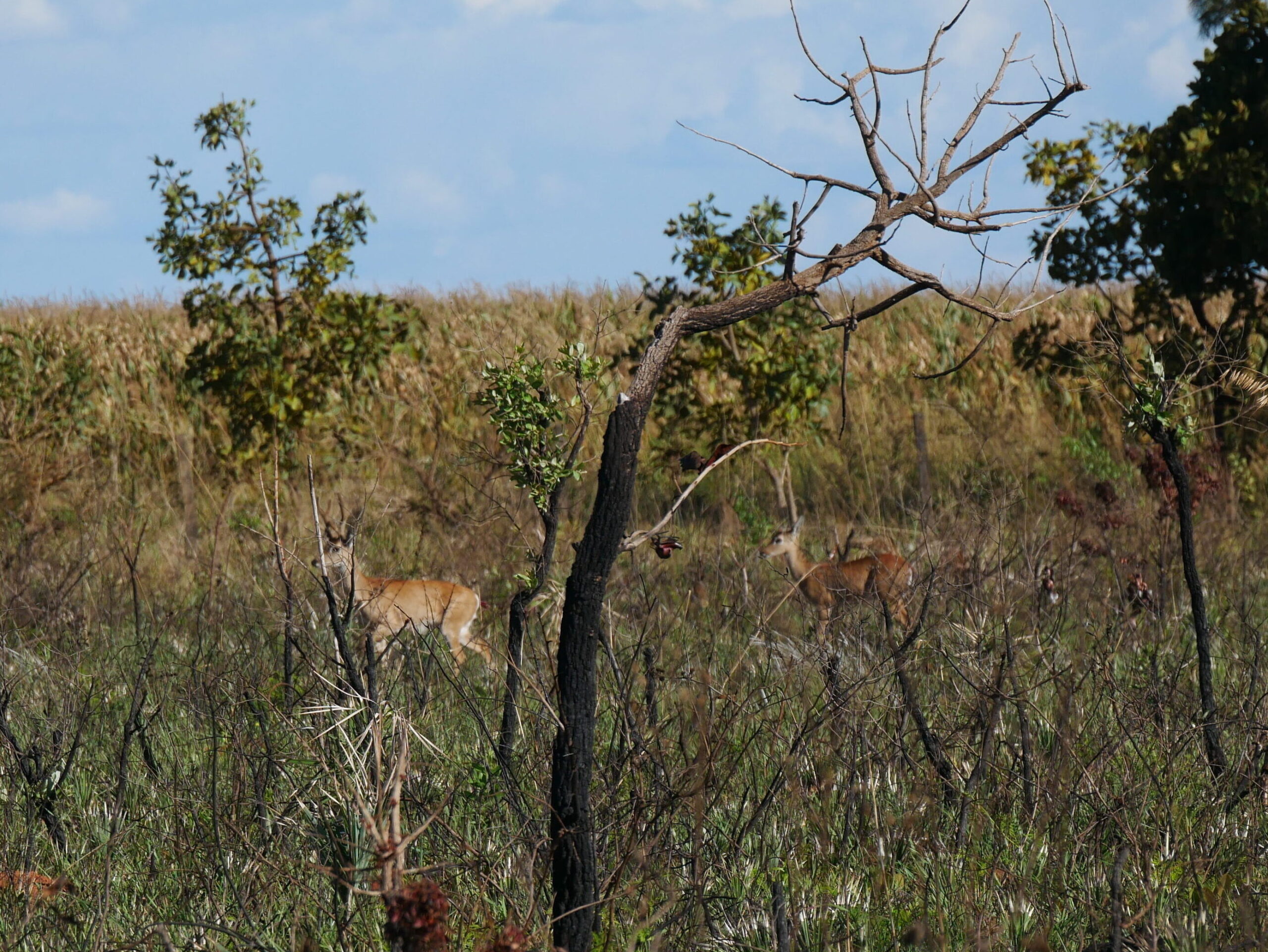
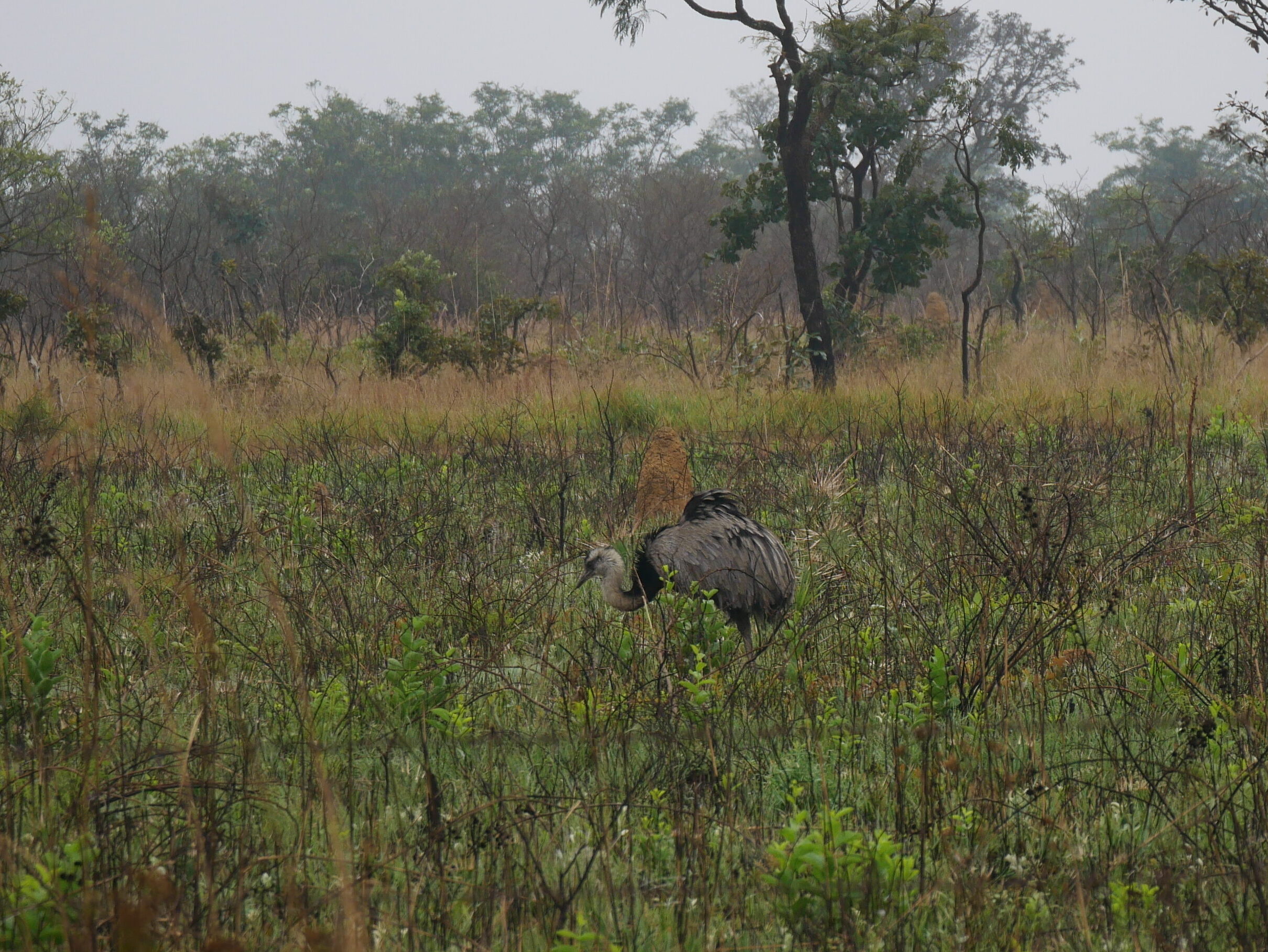
We set off in Phil along the self-drive safari route through the national park. It was a hot but interesting drive through open savanna and scrubland with impressive termite mounds dotting the landscape. During the drive we encountered a few pampas deer as well as a variety of birds, including greater rhea, burrowing owls, campo flickers, buff-necked ibises, and peach-fronted parakeets.
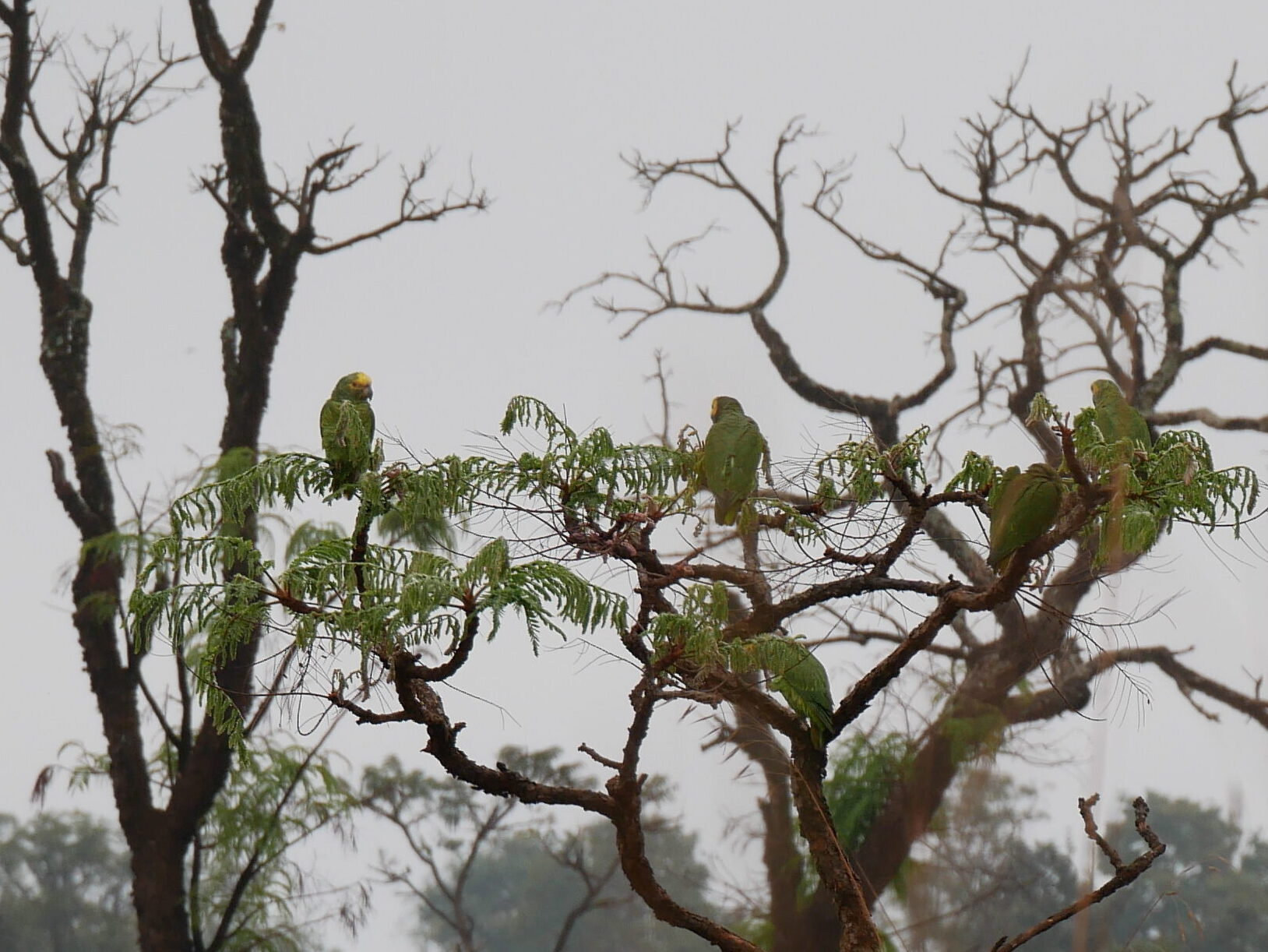
We parked up near the beautifully clear Rio Formoso where there was an empty campsite (we were told that it was not permitted to overnight there, although we didn’t fully understand the reasons!), and took a short walk along one of the trails. Whilst walking we spotted a few more bird, including red-legged seriemas, a pair of curl-crested jays, a yellow-rumped marshbird, yellow-faced parrots and turquoise-fronted amazons. We then took advantage of the functioning shower block at the campsite before driving back to the entrance of the national park (where we were permitted to spend the night). The sun was setting as we made our return journey and we were on the lookout for maned wolves, tapirs and giant anteaters. Unfortunately we were not lucky enough to spot anything other than a few paraques.
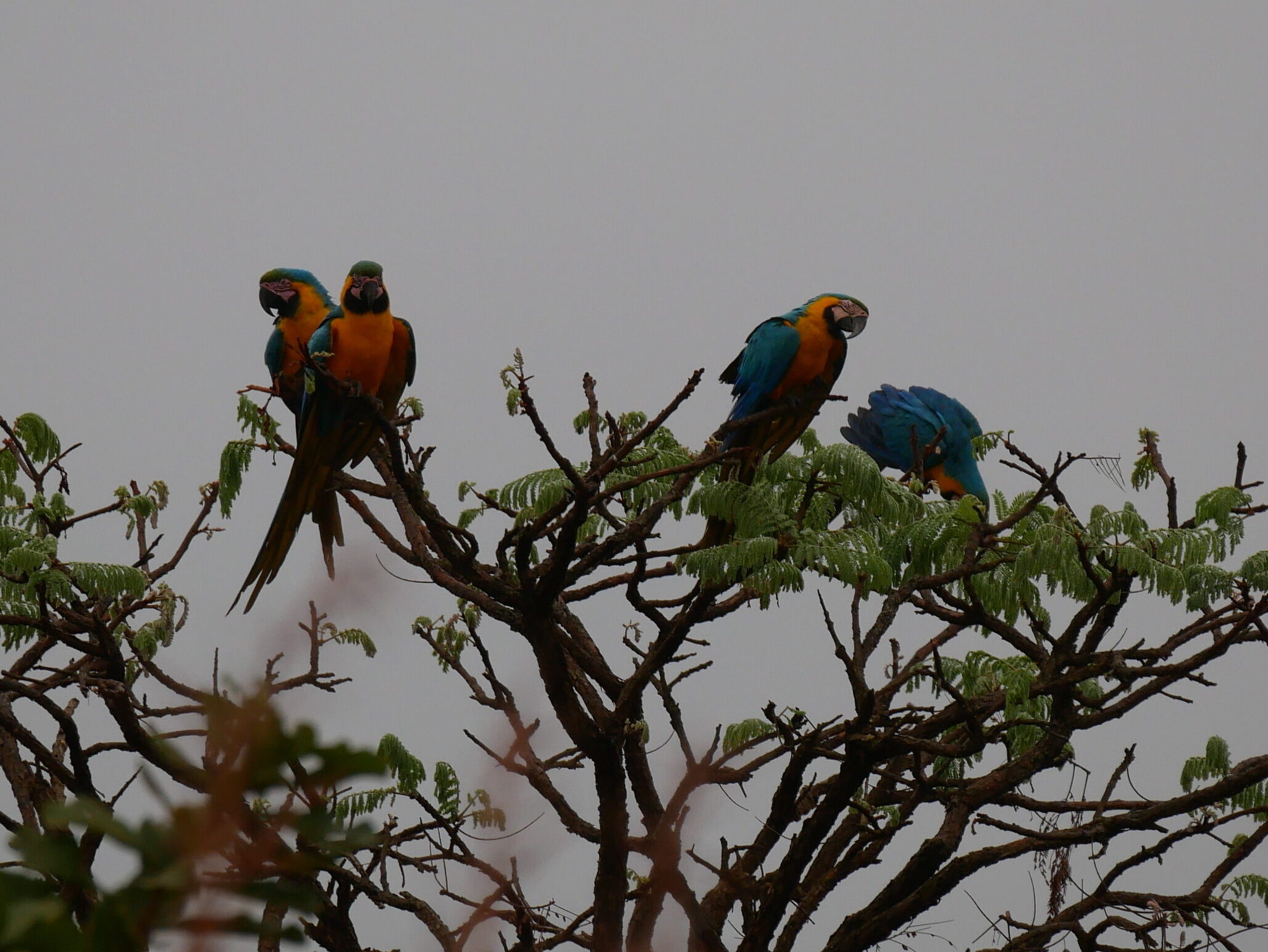
The next morning we woke to thick cloud and mist, and the sound of blue and yellow macaws in the trees just outside the van! We were very happy to see these brilliantly bright blue birds! We had a relaxed morning watching the birds, and chatting with the ranger that lives by the entrance to the park. He told us stories and showed us photos of some of the wildlife that lives in the park and visits the area by his house. He also told us all about the importance of the Cerrado ecosystem, and explained how humans have altered the land across much of the Cerrado to make it suitable for farming, sadly at the expense of the environment, the delicate Cerrado ecosystem and its wildlife. It was a really interesting chat, and his wife even offered us some homemade pão de queijo (Brazilian cheese bread).
As mentioned, the national park was closed that day so we needed to move on. Luckily the ranger suggested that we head to a nearby state park called Parque Estadual das Nascentes do Rio Taquari. Read our next blog to hear about our visit there, where we had a wonderful mammal sighting!
Summary
We enjoyed our brief visit to Emas National Park, and we were the only visitors on that Sunday afternoon at the end of June. However, we wish we could have stayed longer to increase our chances of spotting a maned wolf and other wildlife, and it seems that at this time of year it is not possible to arrange guided tours with the park rangers without prior arrangement. Also, it is not possible to stay overnight in the national park, only at the entrance by the ranger’s house. Since our visit, we have met some people who stayed at Pousada do Glória nearby and said that the pousada owner herself took them on an excellent full-day guided tour of the park.
We concluded that in order to get the most out of a visit to Emas, it is worth taking a guided tour or at least spending a good few days exploring by car and on foot to increase your chances of varied wildlife encounters.
How to get there
The main entrance to Emas National Park is situated along the GO-206, a well-maintained gravel road near the town of Chapadão do Céu. The national park is around 370 km from the city of Campo Grande, and 570 km from the city of Cuiabá, and it sits on the boundary between the state of Goiás and Mato Grosso do Sul.