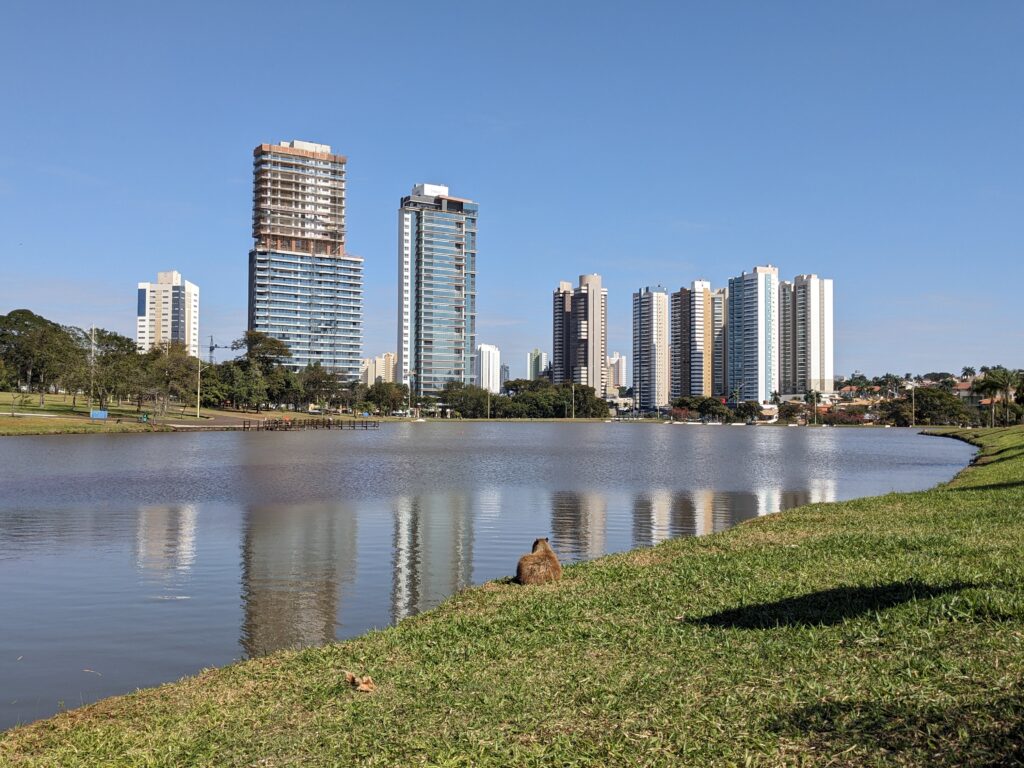
We don’t normally write blogs about our visits to cities. However, Campo Grande in Brazil has a particular park – Parque das Nações Indígenas – which has so much wildlife that we believe warrants a short post!
We were in the city looking for a mechanic to take a look at a transmission oil leak which had sprung up. But, as so often seems to be the case, it was a Friday when we needed a mechanic and we would have to wait until Monday to be seen. We parked up just outside the Parque das Nações Indígenas, at a large parking lot marked on the trusty iOverlander app. We had the company of a number of other overlanders and enjoyed meeting a few other travellers and hearing about their journeys.
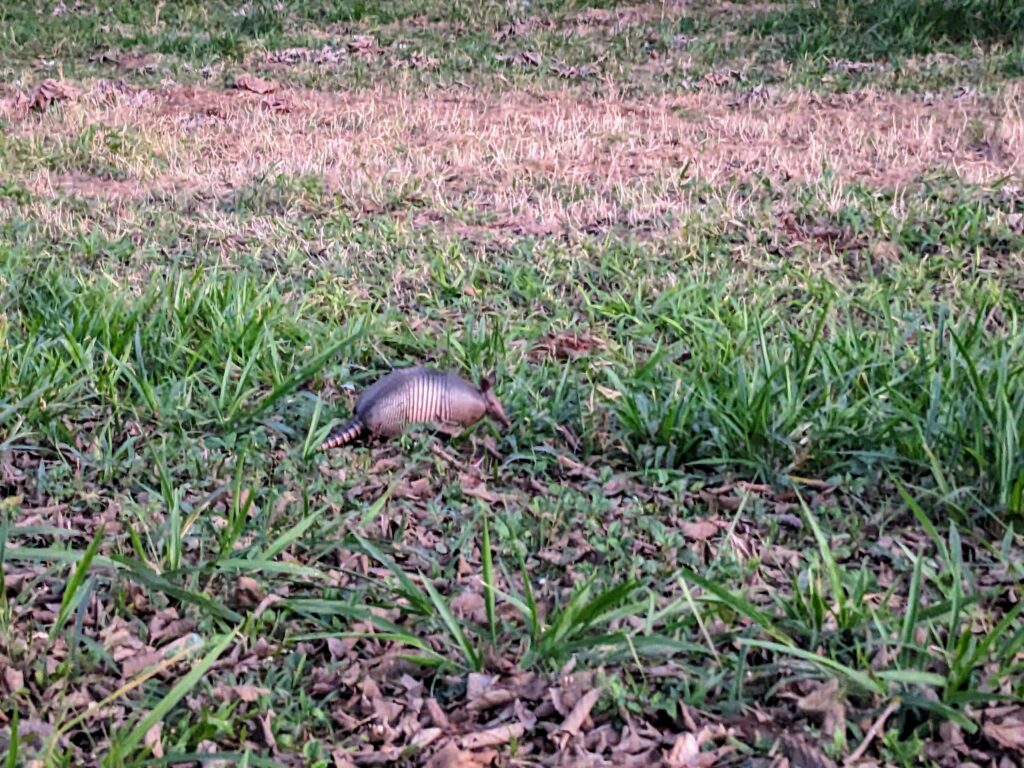
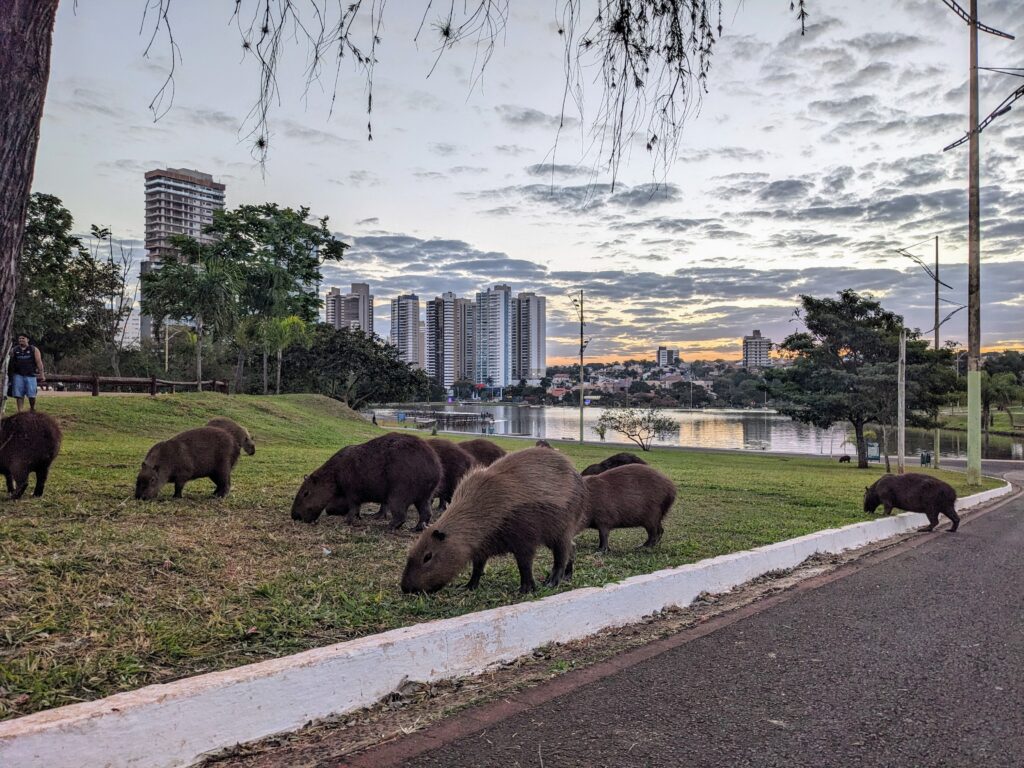
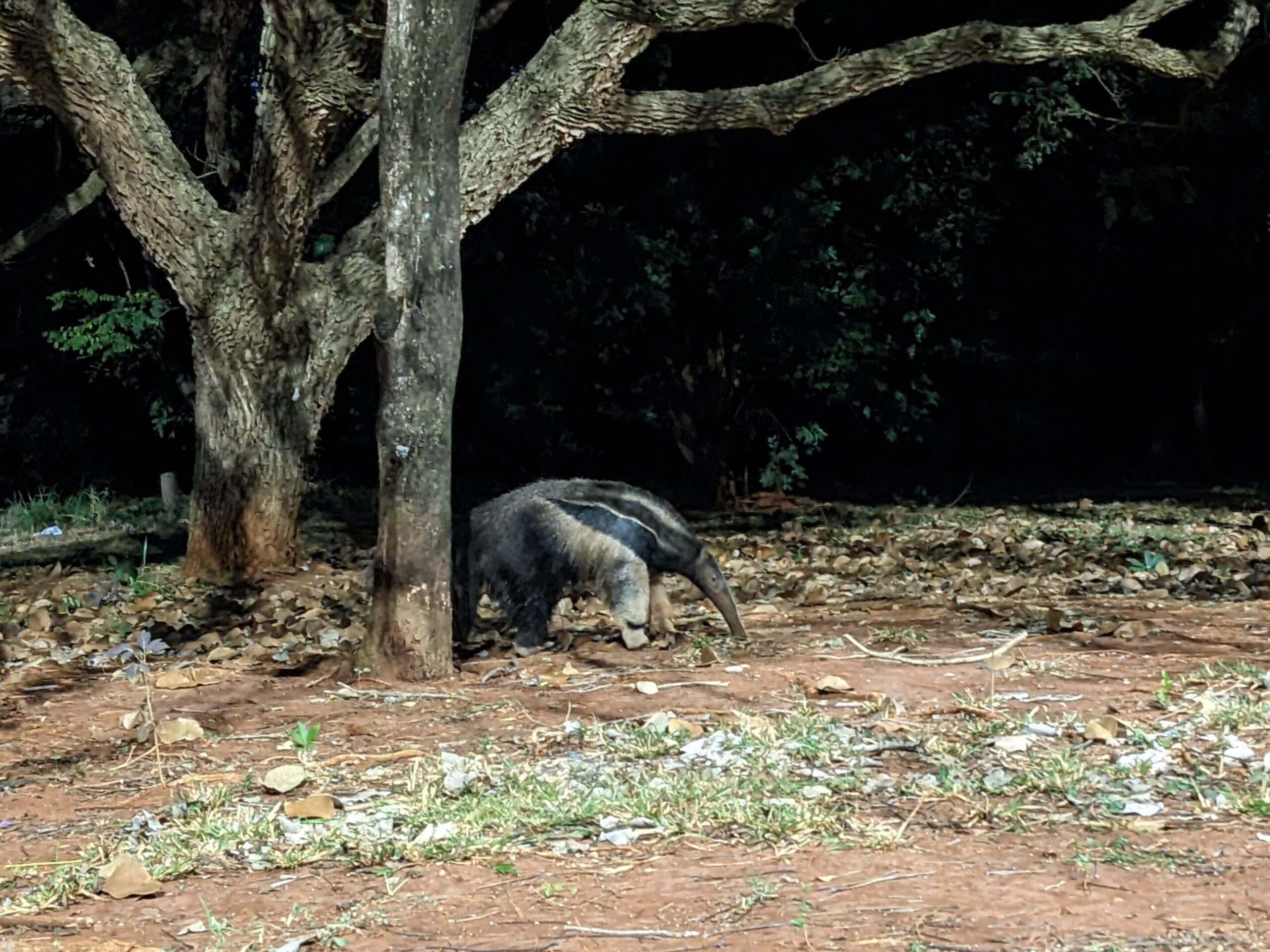
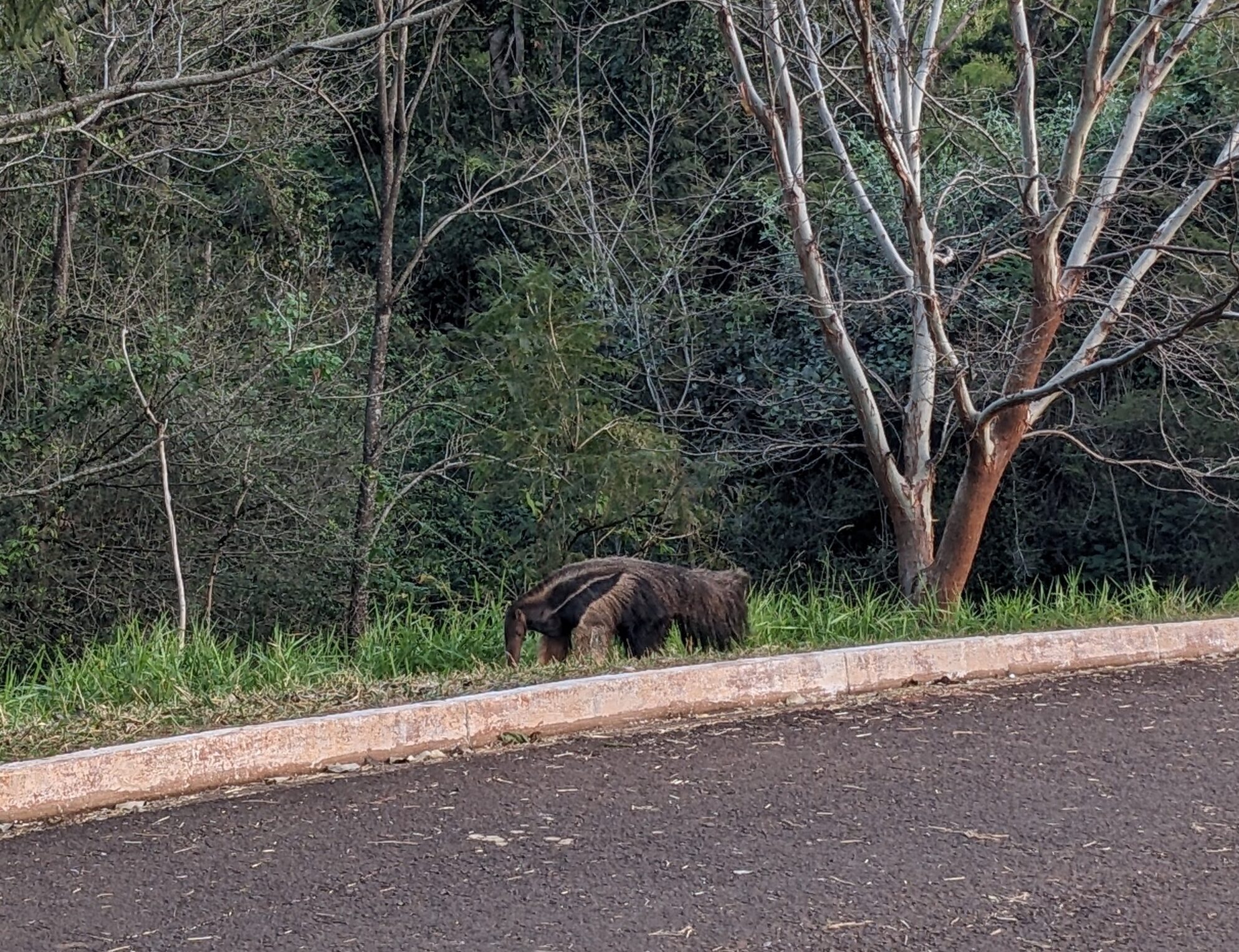
In the evening we took a stroll and found over 100 capybaras dotted throughout the park! There were groups which were grazing, snoozing and a few were bathing in the river. We also found a cute little pichi armadillo scurrying through the vegetation searching for food. And, to top off the evening we spotted a giant anteater! This was one of the few mammals that we hadn’t managed to spot whilst we were in the Pantanal, so we were very excited and surprised to find one here!
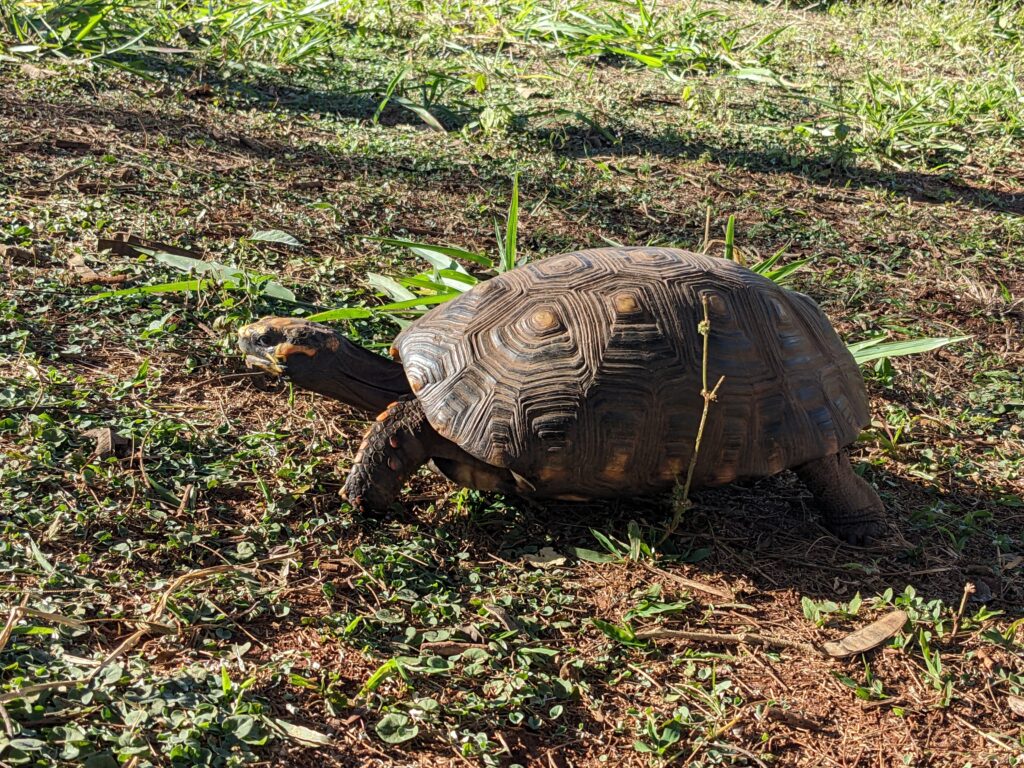
Over the weekend, we went on numerous walks and runs around the park. The capybaras were of course omnipresent. We saw, another giant anteater, and another pichi armadillo as well as a red-footed tortoise, a group of South American coatis, a couple of Central American agoutis and a family of bare-faced curassows.
So, if you are ever in Campo Grande, Brazil then we highly recommend a visit to Parque das Nações Indígenas! The park, along with the neighbouring Parque Estadual do Prosa, has an abundance of native vegetation and therefore provides a haven for wildlife in the heart of the city1.