Long before arriving in South America, we identified the Iberá Wetlands as one of the top places that we wanted to visit on this trip. After reading various reviews on wildlife sightings, visitor numbers and accessibility, we chose to visit through the Cambyretá Portal and stay at a free campsite inside the National Park. We are so glad we did! Our stay here was a real highlight of the trip so far. The wildlife was incredible!
Reaching the campsite
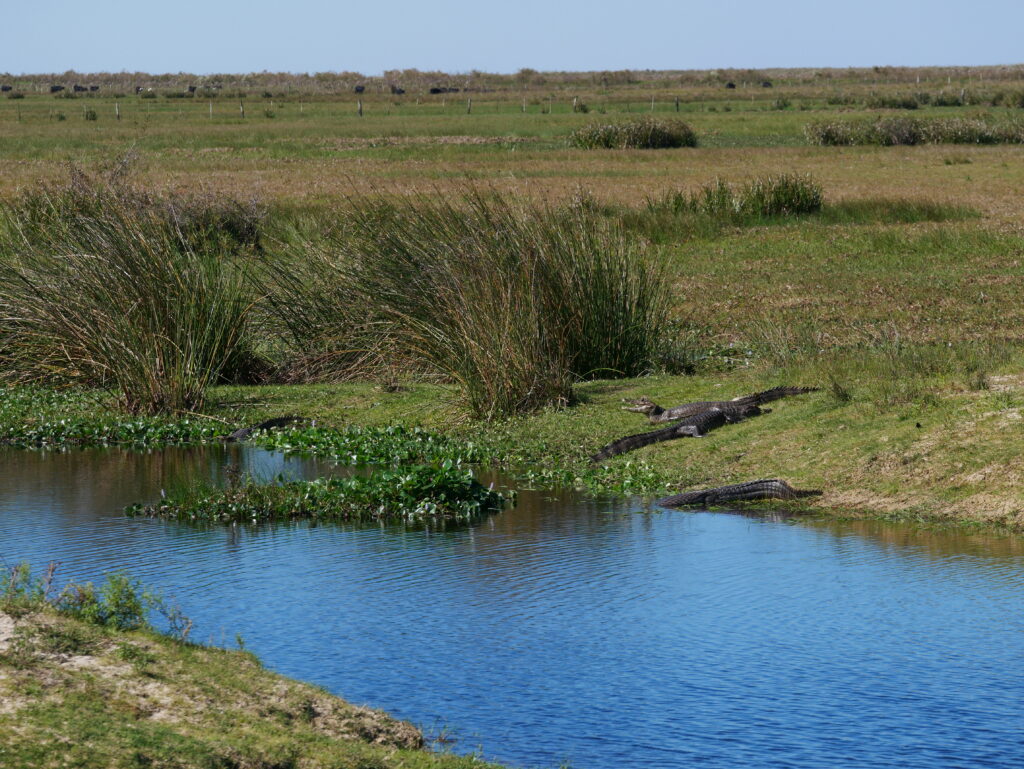
As always, we treated the 30 km drive along the dirt/gravel road to reach the campsite as a wildlife safari drive. As such, before even entering the Iberá Wetlands National Park, we spotted a group of black caiman and a huge variety of birds, many of which were new for us. We were particularly excited to spot a group of roseate spoonbills, a pair of burrowing owls, an Amazon kingfisher, many brightly coloured campo flickers, a few huge, quirky southern screamers and the impressive Maguari stork. Also, although not wild, we really enjoyed seeing water buffalo wallowing in adjacent pools as we passed through, often with tropical kingbirds sitting on their heads!
Wildlife encounters
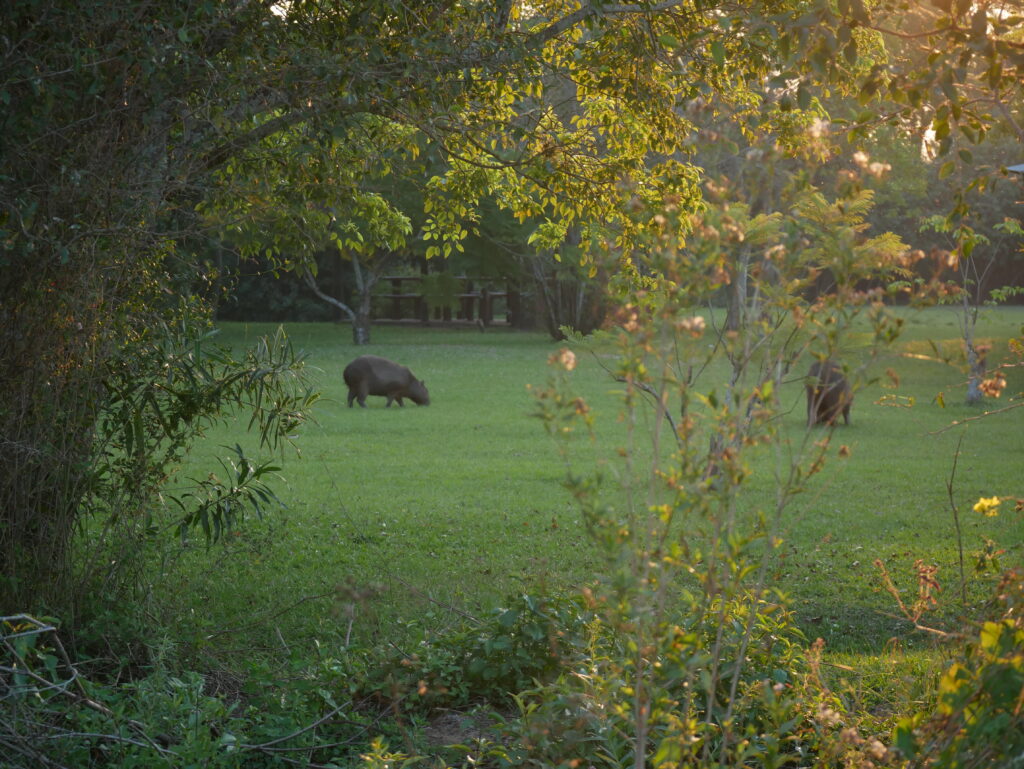
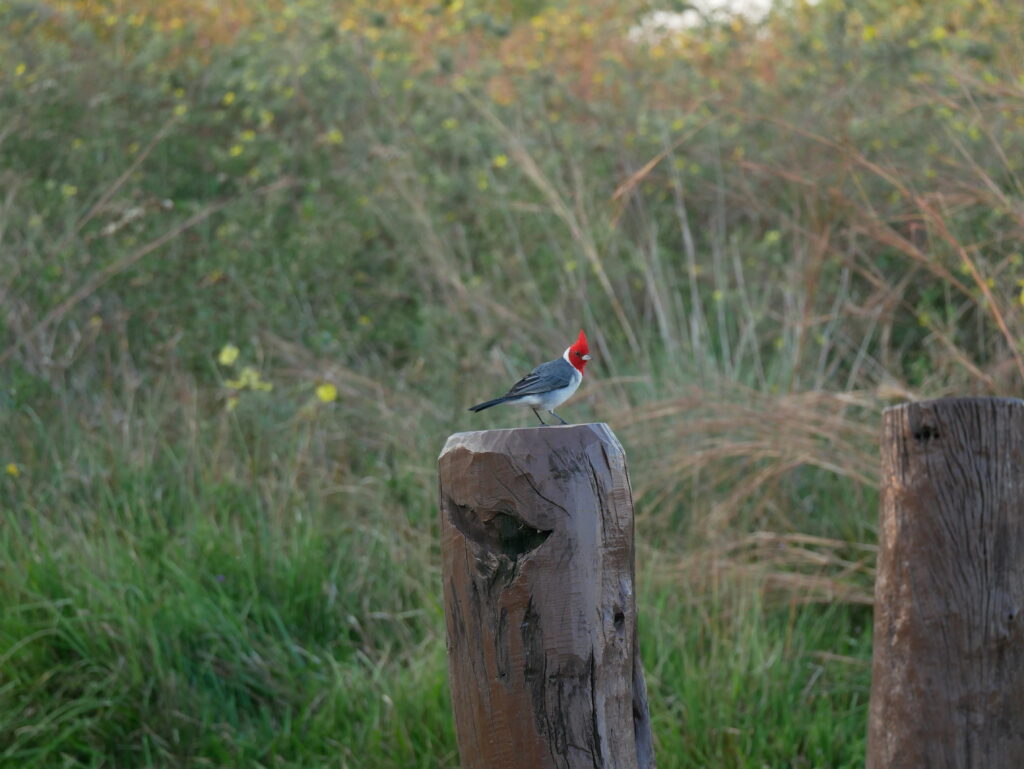
Other than a pickup truck driven by a park ranger, we didn’t see a single other vehicle during the drive in and we arrived to an empty campsite. It was so peaceful and beautiful. Not only is it surrounded by nature, much of the local wildlife actually visits the campsite! Just as we were settling in, Ed went for a short stroll and came across a capybara sitting right in the middle of the path! It seemed completely unfazed by his presence, continuing to munch away on the lush grass. Later, just as the sun was setting, we were observing a pair of stunning red-crested cardinals by the van, when three more capybaras wandered out from the bushes and began grazing on the campsite itself. What a beautiful and unique sunset experience!
The next morning we woke up to the beautiful sounds of birds singing. We were lured out of bed, picked up our binoculars and enjoyed identifying a few individuals from our morning choir. There were hooded siskins, blueish-grey saltators, yellow-browed tyrants, cattle tyrants, sooty-fronted spinetails, greater thornbirds, and our personal favourite, as they look like tiny blue bandits – the masked gnatcatcher.
We also heard the slightly less melodic sounds of parrots screeching nearby. We spotted a group of Monk’s parakeets in a tree nearby, but that wasn’t the sound that our ears were picking up on. We were sure that we could hear macaws but we didn’t think there were macaws living in the Iberá Wetlands. Finding a ranger to ask, he told us that red and green macaws have recently been reintroduced to the area! We were very excited – we have a real affection for these beautiful, intelligent and charismatic birds, having worked on a scarlet macaw reintroduction project in Costa Rica back in 2019. Following the noise, we managed to catch a glimpse of a macaw from a distance. We hoped to get a closer view in the coming days.
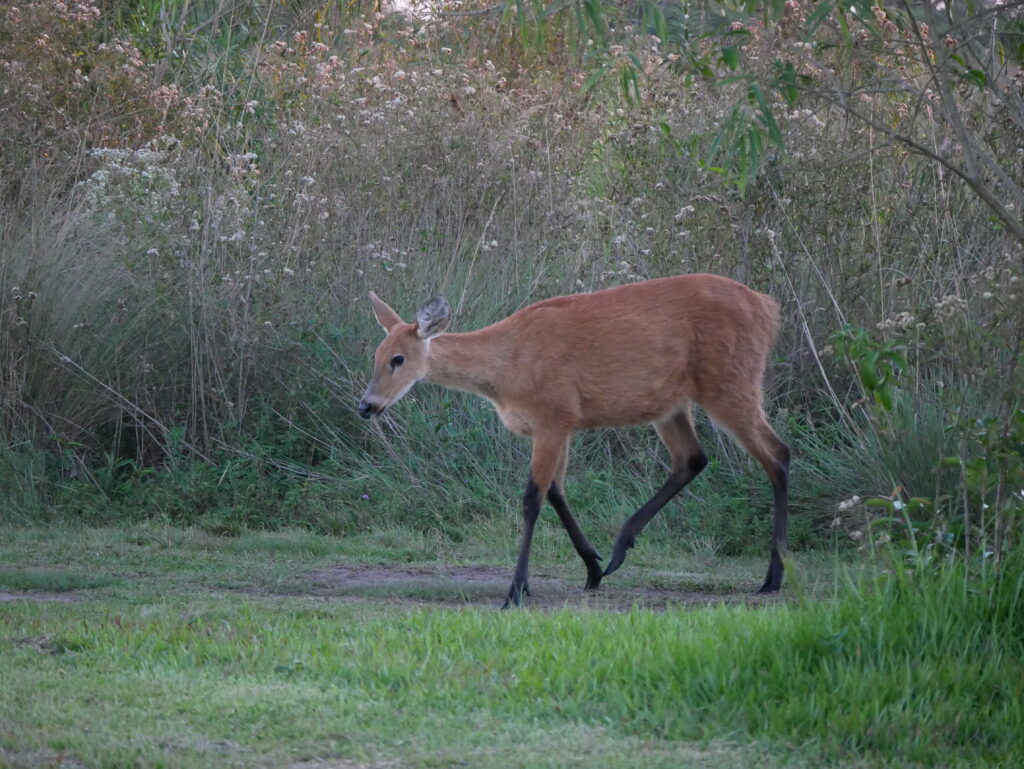
Our day was off to a strong start and we decided to walk the short trails surrounding the campsite. Along the way we came across an elegant marsh deer, as well as many little birds including a sooty-footed spinetail, greater thornbird and yellow-browed tyrant. As we neared the campsite again, we were treated to the most wonderful sight – two female capybaras nursing around a ten pups between them. They were adorable! Later that afternoon, the same capybara families visited the campsite and we watched as they fed, played, nursed, took dust baths and offered their bellies to the birds for parasite removal.
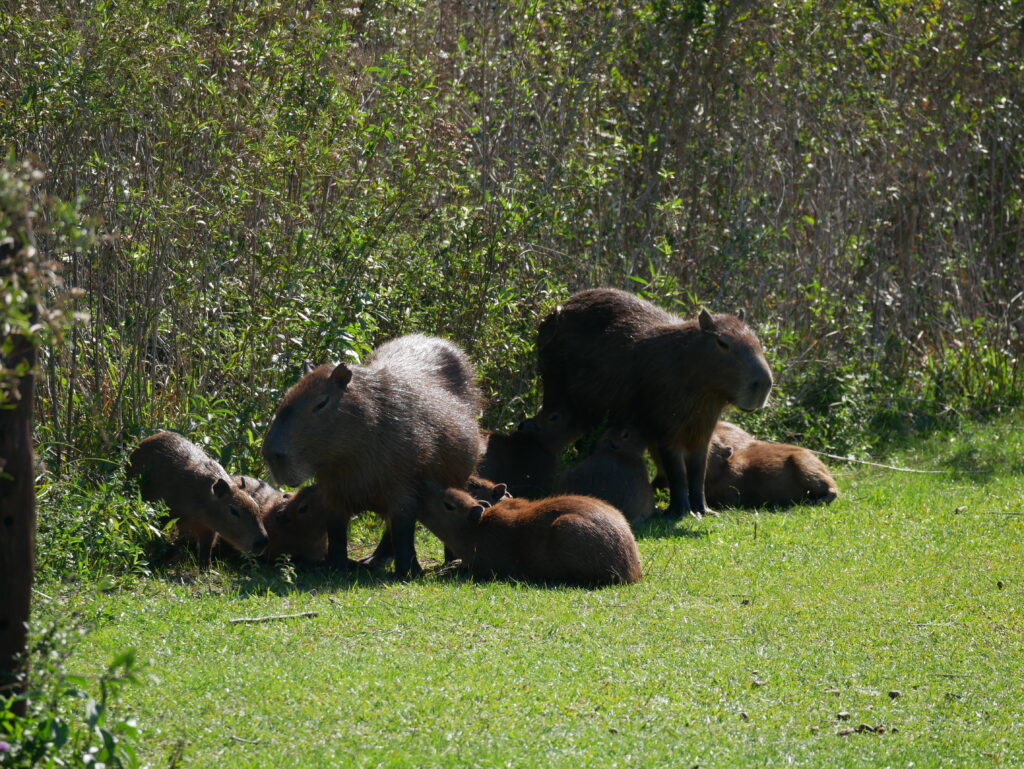
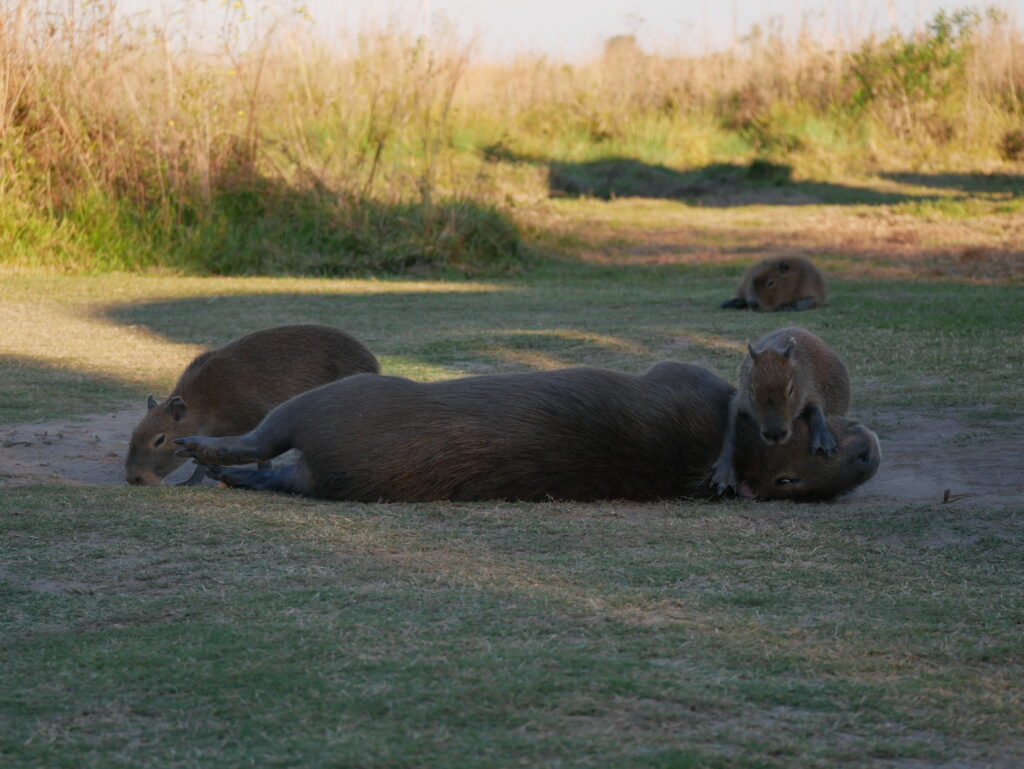
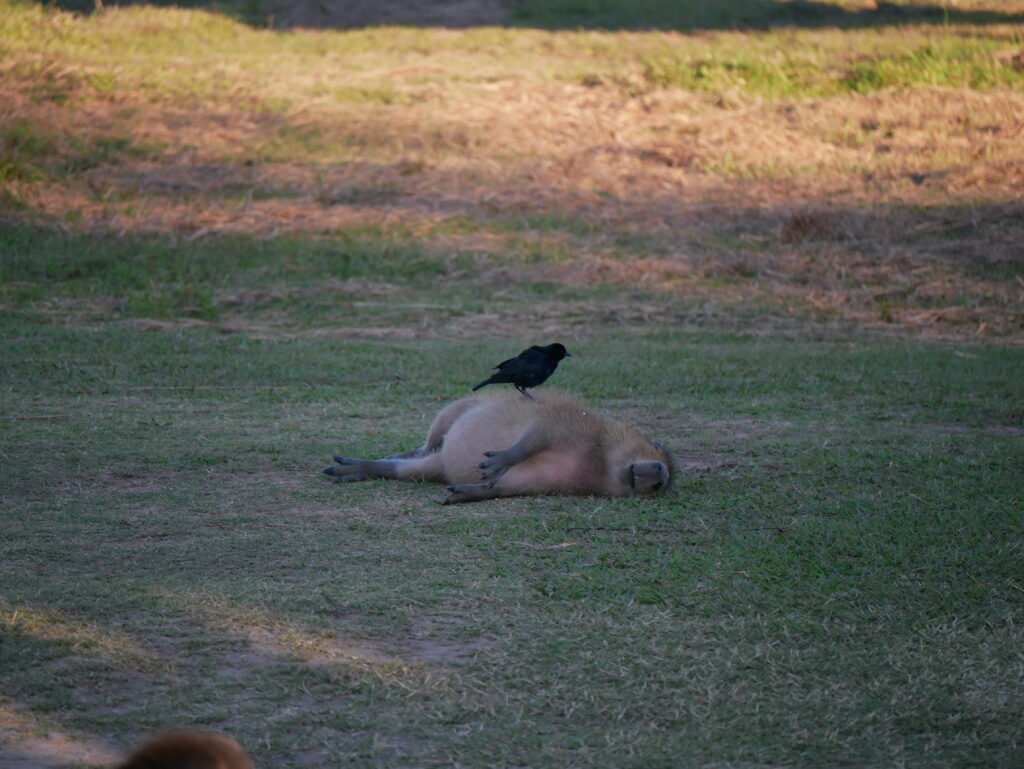
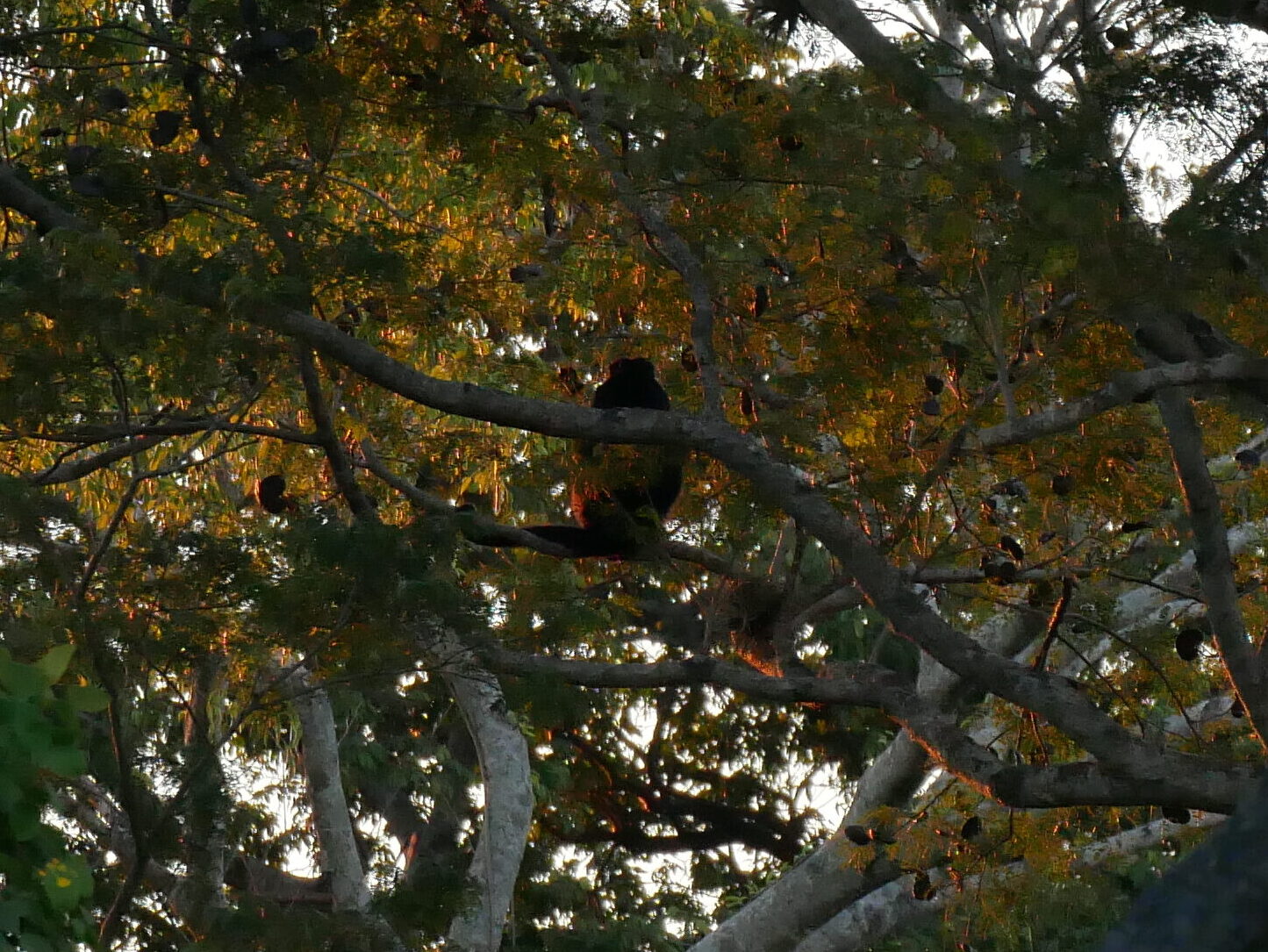
Just when we thought our wildlife sightings couldn’t get much better for the day, they did! We took an evening stroll over to the trees where we glimpsed the macaws that morning. Unfortunately, although we could hear macaws in the distance, we couldn’t see any. Our slight disappointment was almost instantly lifted however as we spotted another marsh deer followed by a group of black and gold howler monkeys in the tree just in front of us! We were quite surprised to see them and felt very lucky, especially as when we were chatting with a local the next day, he told us that howler monkeys are difficult to spot in the area.
The next morning, we woke early again to the sound of the birds (perhaps the perfect alarm clock). We were beginning to figure out the ranger’s schedule and had noticed that they arrived each morning to fill up some containers. They then drove to the area of trees where we had seen and heard the macaws. When they arrived, the macaws would make a lot of noise. From our experience of working on a macaw project, we guessed that the rangers are likely still feeding them to aid their return to the wild and also to enable them to monitor the population.
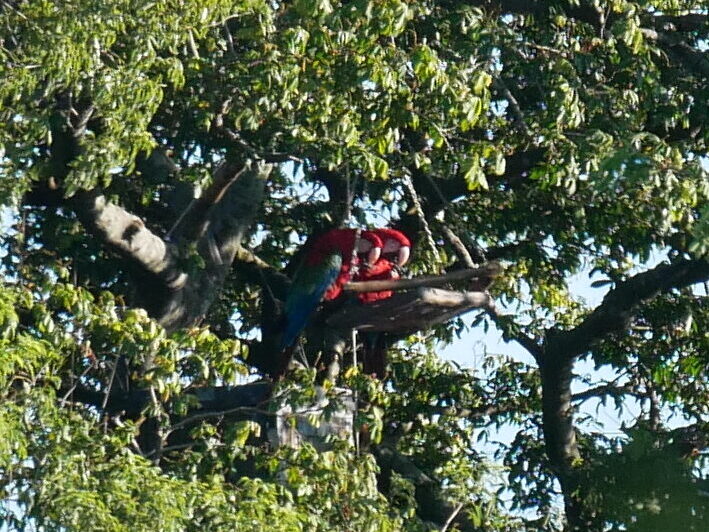
So, we of course headed out to investigate. By the time we had reached the location, we couldn’t see the rangers but we could see a pair of red and green macaws feeding away on the food provided! It made us so happy to see them. Although they are of course a different species, they do look incredibly similar to the scarlet macaws we worked with.
On our final day within the national park, we decided to drive the longer ‘trail’ (car or bike only) Paseo Cambyretá. Along the way we encountered more capybara, caiman, and even more new bird species including the very cool jabiru, a ringed kingfisher and a black-collared hawk.
We thoroughly enjoyed our time spent within the Cambyretá Portal of the Iberá Wetlands. It is a less-visited part of the national park- at this time of year, we were the only people staying there, with just a handful of local families visiting in the afternoon to take a stroll and use the BBQs and have a parrilla – but certainly no less diverse in terms of wildlife.
How to get there
The Cambyretá portal within the Iberá Wetlands National Park is located 230 km away from the city of Corrientes. To reach the entrance and campsite, you must drive 15 km from Ituzaingó along Ruta 12 before taking the signposted turning. Then it is 29 km of dirt/sand roads. There is some advice online about needing a 4×4 vehicle to get there. However, we were absolutely fine in our large 2WD van in dry weather. Perhaps the road deteriorates in the wet season so it may be best to check road conditions before travelling1.
It is also possible to hire a guide to explore the national park, which would include transport.
When to visit
There is wildlife to see all year-round. Possibly, the best times to visit are during spring (September-November) or autumn (March-May) with comfortable temperatures and good wildlife-spotting potential. It can get very hot in the summer months.
Sources
- La Ruta Natural: https://larutanatural.gob.ar/en/must-see/148/ibera-cambyreta-portal